Portable Sand Blasting Hopper vs. Pressure Blasting Machine: Which One Is Right for You?
Choosing the right blasting equipment can make a big difference in the quality, speed, and overall cost of your work. Two options you’re likely to come across are a portable sand blasting hopper and a pressure blasting machine.
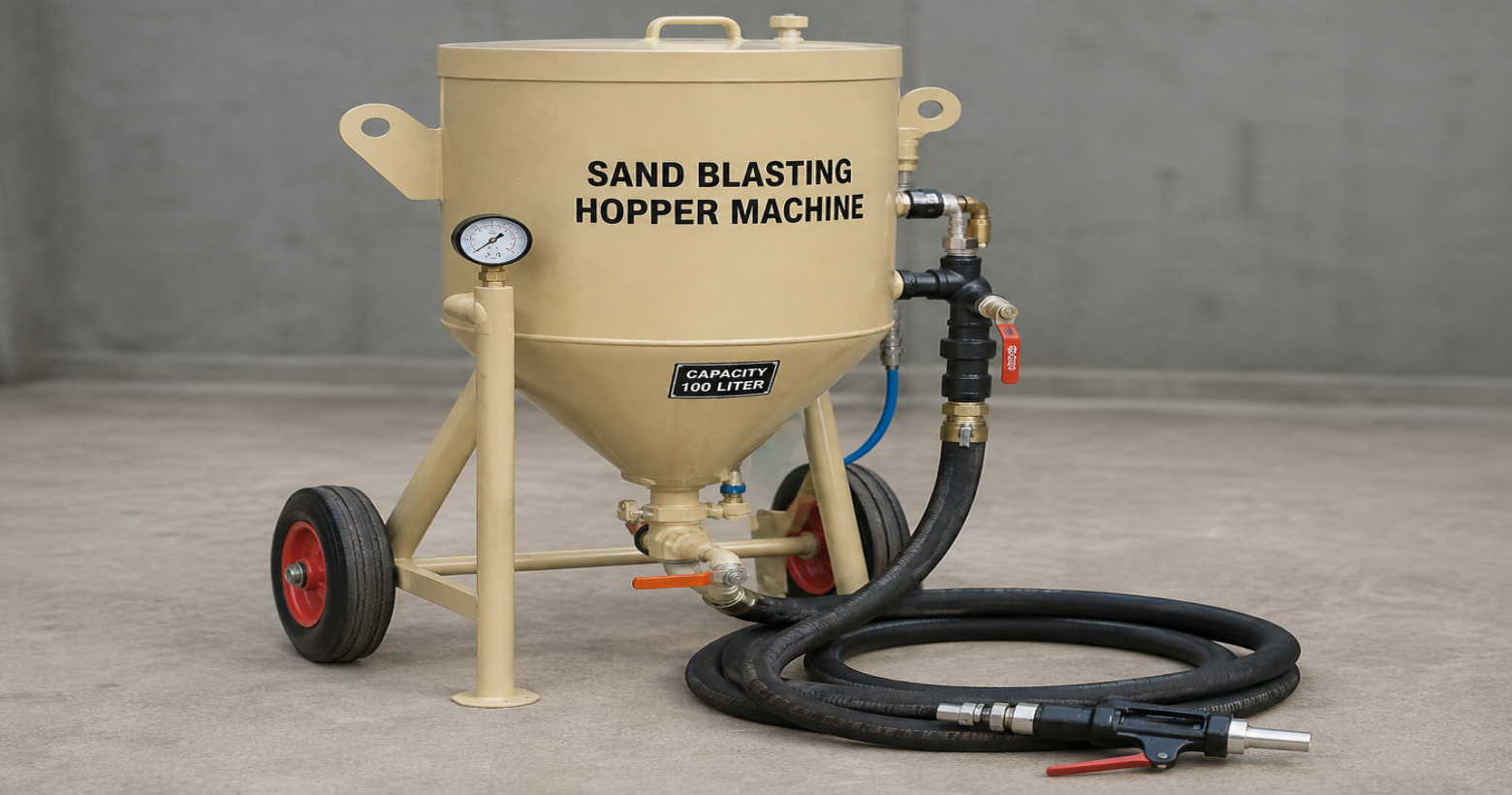
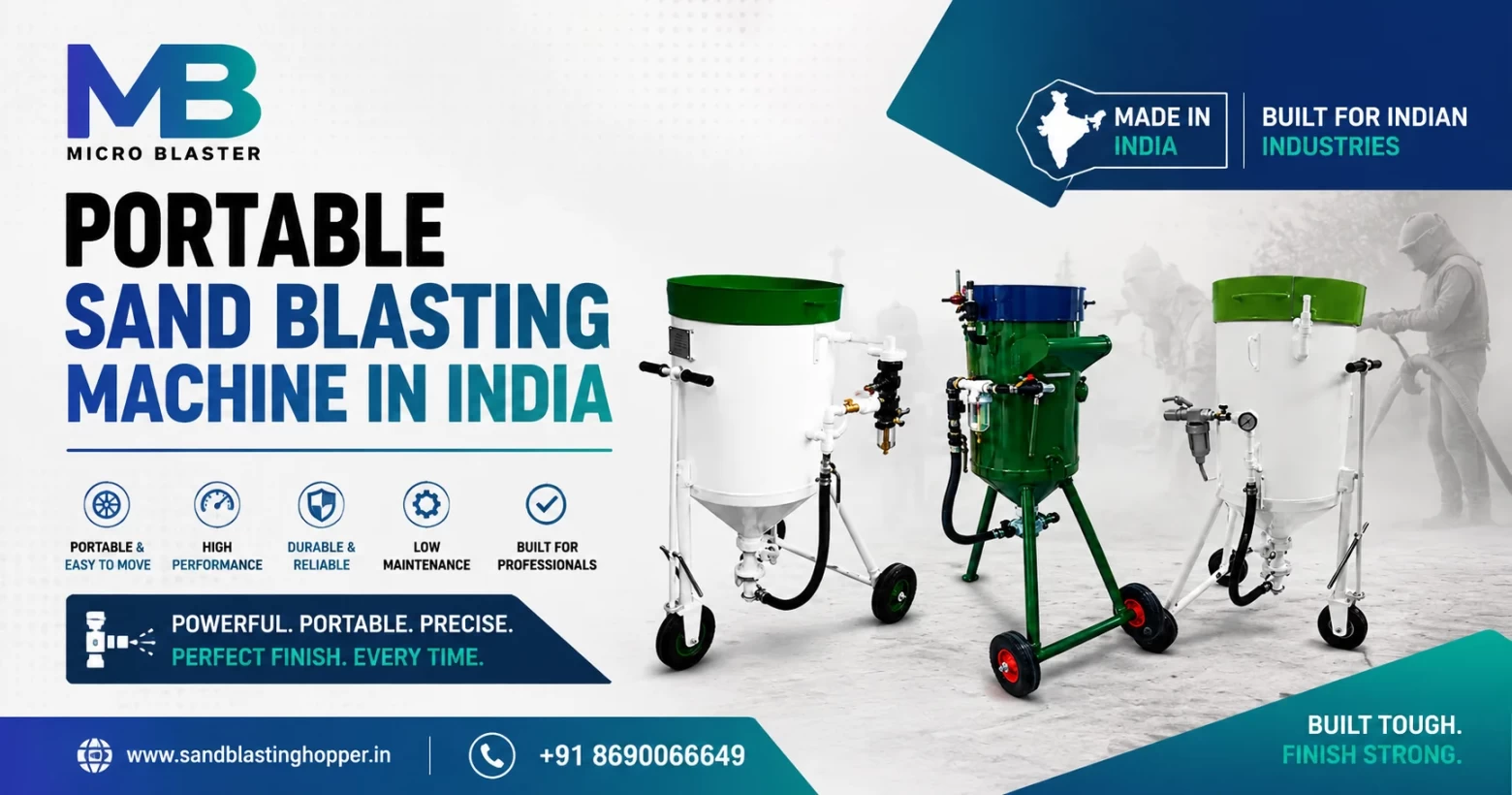
A portable sand blasting hopper is designed with mobility and convenience in mind. Its compact setup makes it a practical option for workshops, repair jobs, construction sites, and other applications where the equipment needs to be moved from one location to another.
It can be particularly useful for smaller or occasional blasting projects where you don’t necessarily need a heavy-duty industrial system.
But choosing the right equipment isn’t always straightforward.
While both are designed to remove rust, paint, corrosion, and other surface contaminants using air compressed and abrasive media, they’re built for different types of applications. Understanding how each one works can help you choose the equipment that fits your specific needs.
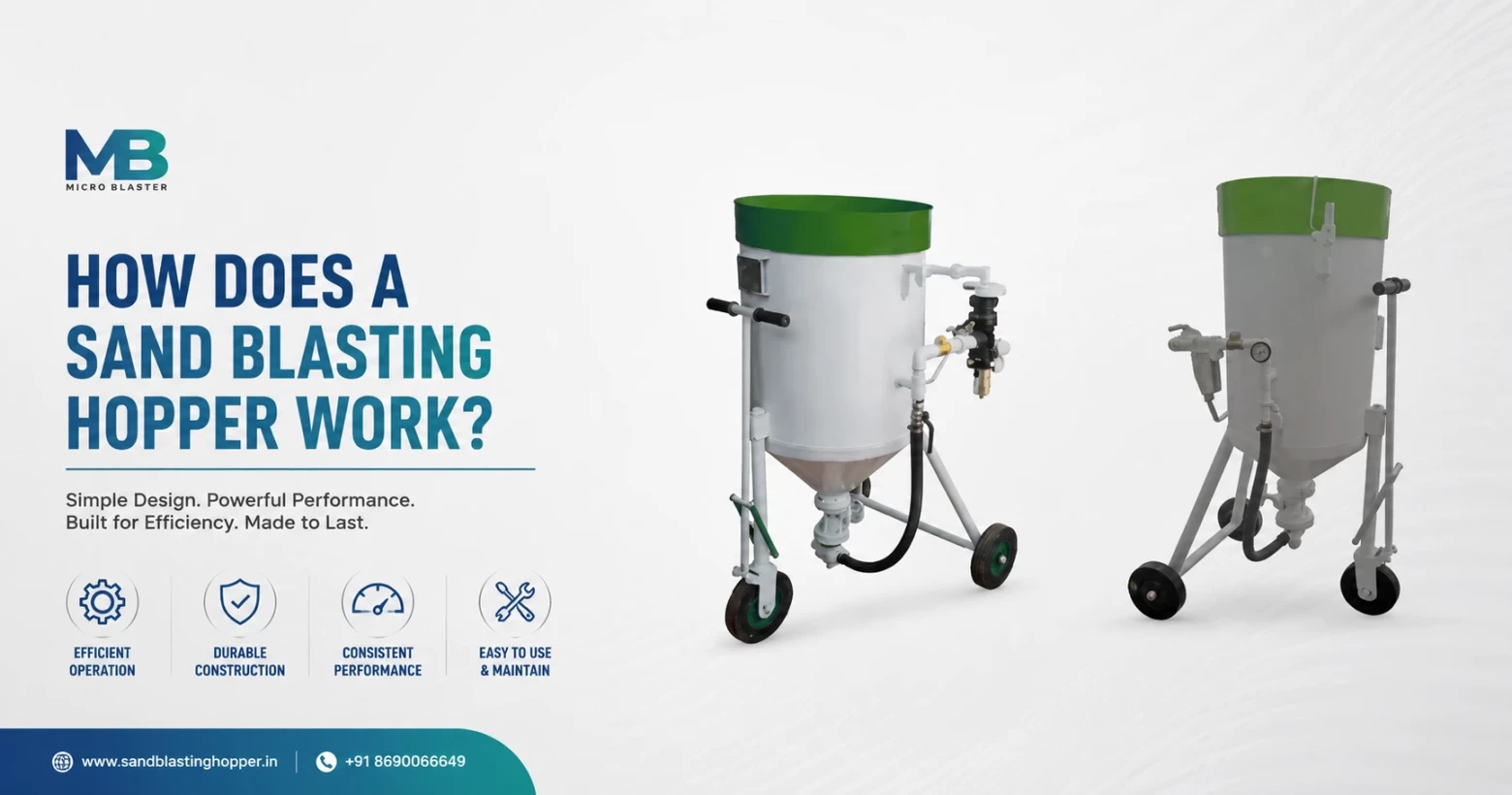
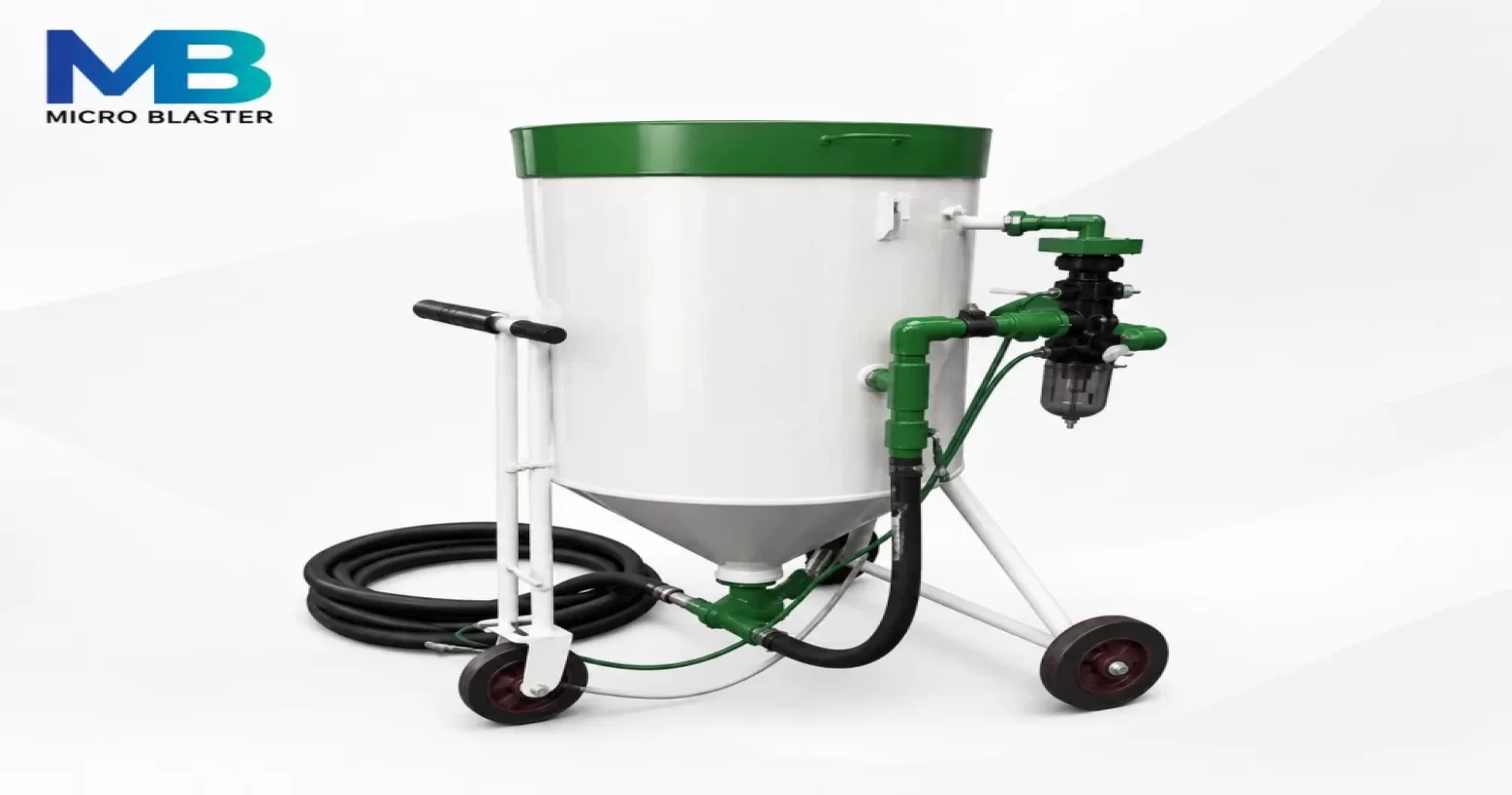
Think of a portable sand blasting machine with a hopper as your agile, go-anywhere option. It holds your abrasive media in an open blasting hopper and uses a siphon or gravity-assisted system to feed that media into the airflow.
Think of a portable sand blasting machine with a hopper as your agile, go-anywhere option. It holds your abrasive media in an open blasting hopper and uses a siphon or gravity-assisted system to feed that media into the airflow.
If your job takes you from site to site, or if you don't have space for a dedicated blasting bay, a sand blasting hopper is super handy. You can easily wheel it around the shop, throw it in the back of a truck, and set it up in minutes.
It’s a popular choice for light maintenance, small fab projects, machinery touch-ups, and spot-cleaning automotive parts.
Why go with a hopper?
- Super mobile: Easy to roll around or transport to job sites.
- Simple set-up: No complex pressure vessel checks or complicated plumbing.
- Compact footprint: Doesn't take up precious shop floor space.
- Versatile: Handles various media types, whether you're running fine glass beads or using it as a light steel shot blaster.
Just keep in mind that performance depends heavily on your nozzle size, media, and—above all—the size of your air compressor.
What Is a Pressure Blasting Machine?
A pressure blasting machine works on a different principle. Instead of drawing media from an open container, the abrasive blasting is sealed inside a pressurized vessel (or blast pot). Compressed air pushes down from inside the tank and blows through the hose, forcing the media out with a serious punch.
Because the media is delivered under direct pressure, these machines clean much faster and hit much harder.
You’ll usually see pressure units in commercial shops where surface prep is a daily routine. They’re common in industrial manufacturing, heavy construction repair, or professional auto shops running an auto sand blasting machine setup for frame restorations.
If you routinely deal with heavy mill scale, thick powder coatings, or large surface areas, a pressure blaster is built for that kind of punishment.
Side-by-Side Comparison
Here is a quick breakdown of how these two types of abrasive blast equipment stack up:
| Feature | Portable Sand Blasting Hopper | Pressure Blasting Machine |
| Mobility | Highly portable and easy to wheel around | Varies (models range from wheeled pots to fixed units) |
| Setup & Maintenance | Very straightforward | Requires pressure vessel care and tuning |
| Best For | Light-to-medium jobs, mobile repairs | High-volume, continuous, or heavy-duty production |
| Blasting Speed | Moderate | Fast and aggressive |
| Shop Space | Minimal | Requires a bit more room |
Which One Handles Heavy Rust Better?
If you're dealing with thick, flaky rust or multiple layers of baked-on industrial paint, a pressure blasting machine takes the trophy. The pressurized tank keeps the media flowing at high velocity without sputtering, letting you slice through grime in half the time.
That said, a portable sand blasting machine with a hopper can still tackle rust—it just takes a bit more time and patience. For small brackets, lawn equipment, or minor rust spots, a standard blasting hopper gets the job done without forcing you to buy a massive industrial rig.
How Portable Do You Actually Need to Be?
This is where the hopper shines. If you're a mobile contractor or you need to blast a huge structural beam that's stuck on the far side of your yard, rolling a light hopper over to the job is a lifesaver.
Pressure units can be mobile too—many industrial models come on sturdy rubber wheels—but they are heavier and bulkier to haul around. If mobility is 80% of your business, a lighter hopper system is hard to beat.
Don't Forget the Air Compressor!
Here’s a rookie mistake people make when comparing the overall sand blasting machine price: forgetting about air supply.
Your blasting unit is only as strong as the compressor feeding it. If your air compressor can't supply enough air volume (CFM) at the right pressure (PSI), even top-tier abrasive blast equipment will stall out.
Before you buy, double-check:
- How many CFM your nozzle size requires.
- Your compressor's continuous duty rating.
- The type of media you plan to run (e.g., standard media vs. heavy media in a steel shot blaster).
Matching your machine to your compressor from day one will save you massive headache down the line.
Choosing the Right Media
What you put inside the machine matters just as much as the machine itself.
- Heavy-duty stripping: Media like steel grit or crushed glass bites into tough surfaces quickly.
- Delicate work: Glass beads or aluminum oxide work great on softer metals or when using an automatic sand blasting machine on thin body panels where warping is a risk.
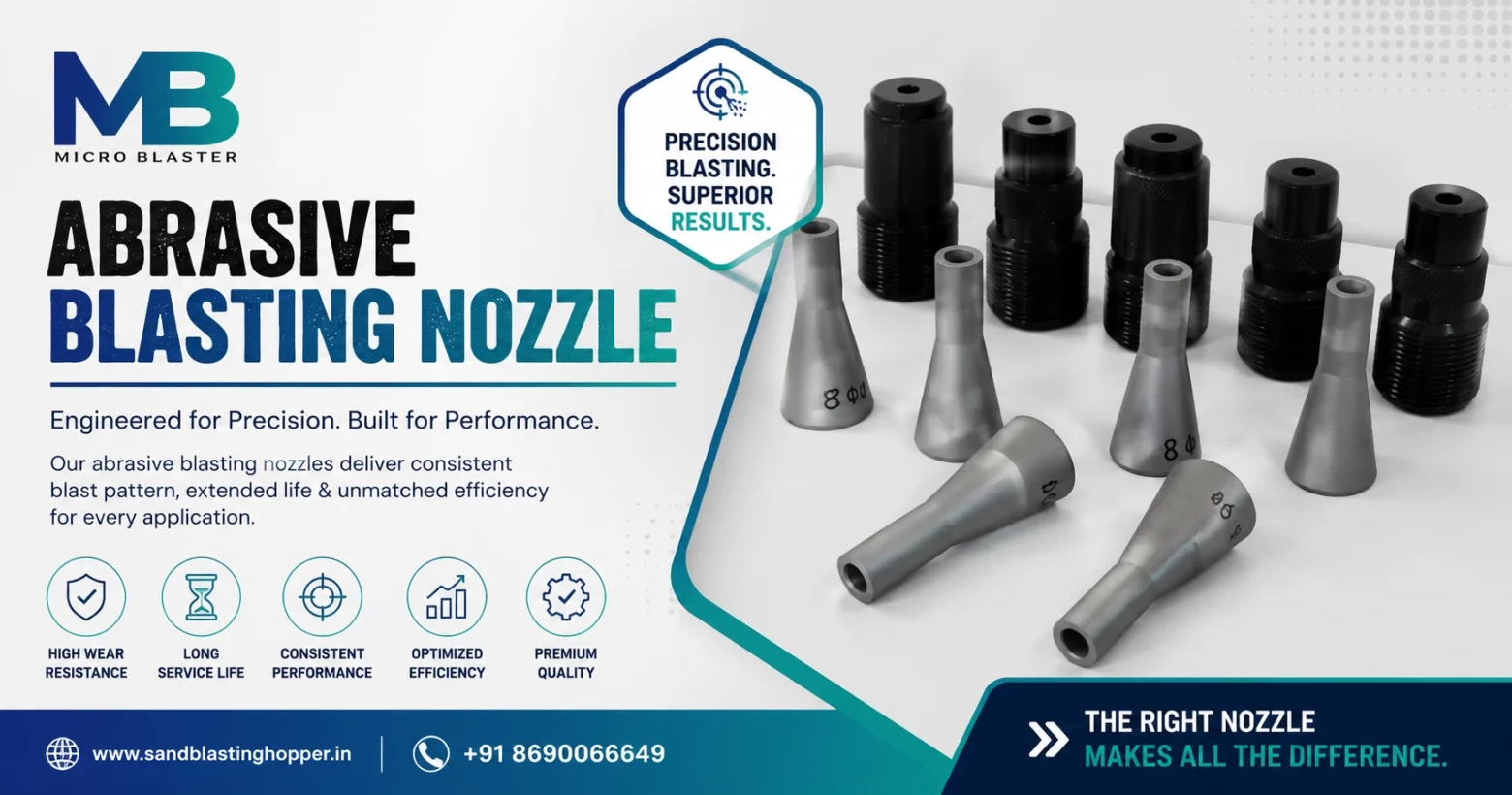
Always check that your equipment hose and nozzle are rated for the grit size you want to run.
The Verdict: Which One Should You Get?
Go with a portable sand blasting hopper if:
- You work in different places and need something easy to transport.
- You handle small-to-medium parts or occasional touch-ups.
- You're working with a smaller shop footprint and budget.
Go with a pressure blasting machine if:
- Blasting is a daily, core part of your workflow.
- You clean large parts, heavy machinery, or thick rust regularly.
- Speed and productivity are your top priorities.
At the end of the day, don't just buy the biggest unit you can find. Pick the tool that fits your daily workload, your compressor capacity, and your shop's workflow—that's how you get the best value for your money.